
Learning how commentary driving works
Commentary driving simply means giving a running verbal commentary while you drive. You say out loud what you can see, what you are planning and what you are thinking.
It’s used a lot in high-speed emergency services, especially police driver training, but it can also be a powerful tool for learner drivers.
Who uses commentary driving?
High-speed emergency services, such as the police, use commentary driving both:
- during advanced driver training, and
- in real pursuits to stay focused and aware.
What are the benefits of commentary driving?
Commentary driving trains you to focus and stay alert. For many drivers it is extremely effective.
For a lot of people, everyday driving becomes a routine chore. Concentration drifts, just like when you’re walking and not really noticing what’s around you. The same lack of awareness happens when driving – and it affects learners and experienced drivers.
Commentary driving tackles this by forcing your brain to process:
- every hazard you see,
- what it might mean, and
- what you’re going to do about it.
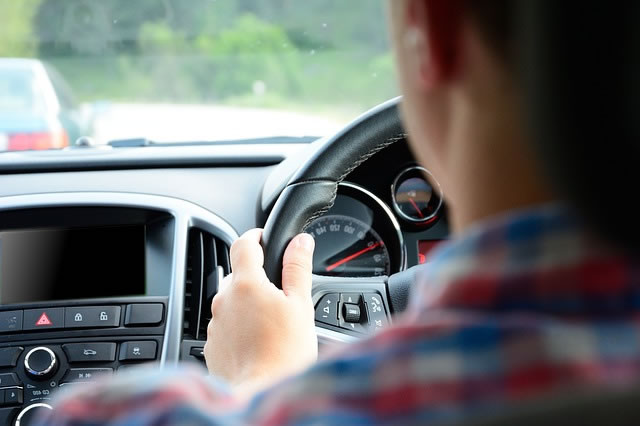
Commentary driving can help significantly with learning to drive
You might think: “Does it really matter if I say it out loud instead of just thinking it?”
In reality, thoughts often get mixed up with other things – worries, daydreams, test nerves – and you don’t always notice.
By speaking out loud, commentary driving:
- blocks out unhelpful thoughts and nerves, and
- keeps you 100% focused on driving.
For learner drivers, it can:
- sharpen observation skills,
- speed up hazard awareness, and
- improve test preparation, especially if you’ve already failed once or more.
If you’re struggling with concentration, awareness or repeated test fails, commentary driving is worth trying.
Is commentary driving for me?
Commentary driving doesn’t suit everyone. If you’re quiet or shy, speaking out loud while someone is watching you drive can feel uncomfortable at first. That might temporarily affect your concentration.
But it’s also a skill in itself that gets easier with practice. You don’t need to start by describing everything you see. Begin with just the main hazards and build up slowly.
Even if the idea feels a bit strange, give it a try for a few lessons and see if it helps you focus.
We can coach you step by step so you learn to “think out loud” and spot hazards earlier.
See manual lesson prices →
See automatic lesson prices →
Learning commentary driving
How you learn commentary driving depends on your stage of learning:
- Complete beginners: your instructor (or the person teaching you) will usually do the commentary first so you can hear what “good” sounds like.
- More experienced learners: you start to give the commentary yourself while they help you refine it.
Commentary driving is more than just repeating routines. You are:
- saying the routine,
- saying what you can see, and
- saying what you will do about it.
Let’s use a simple example: turning left from a major road into a minor road.
You’ll use the MSPSL routine:
- Mirrors
- Signal
- Position
- Speed
- Look
In commentary driving, you talk through that routine and add what you see and what you’re planning.
Mirrors
Examples of what you might say:
- “Main mirror, left mirror – clear.”
- “Main mirror, left mirror – car following at a safe distance.”
- “Main mirror, left mirror – car following closely, easing off the gas.”
- “Main mirror, left mirror – cyclist close behind, easing off to let them pass.”
Signal
You then decide whether to signal:
- “Signalling left.”
- Or, if needed: “Cancelling left turn – cyclist too close.”
Position
Tell yourself what road position you’ll take:
- “Keeping my current position.”
- “Moving slightly left – road is wide.”
- “Positioning into the left lane.”
Speed
Comment on what you see and the speed you need:
- “Junction is closed, can’t see far – slowing to about 5 mph.”
- “Junction is open and clear – slowing to about 10 mph.”
Look
Finally, the last checks:
- “Left mirror – last check for cyclists.”
- “Left mirror – pedestrian near the junction, watching them.”
- “Left mirror – car waiting to turn right into my side road.”
We can build commentary driving around MSPSL so it becomes automatic before test day.
Contact us to check availability →
The examples above are just sample phrases. The exact words don’t matter – what matters is that:
- you are noticing real hazards, and
- you are making a clear plan in response.
Try to keep your commentary:
- short and simple,
- focused on hazards and actions,
- linked to routines you already know (MSPSL, mirror–signal–manoeuvre, etc.).
Use commentary driving in as many situations as you can:
- Moving off and stopping
- Junctions and roundabouts
- Passing parked cars and cyclists
- Lane discipline on multi-lane roads
- Pedestrian crossings
- All the driving test manoeuvres
You can also use it for speed awareness:
- “30 mph limit, I’m doing 28, that’s fine.”
- “New 20 mph sign, easing off the gas.”
At first, commentary driving can feel tiring. Your brain is working harder and staying more focused. If you feel overwhelmed, take a short break, then start again with shorter, simpler commentary.
Your instructor and commentary driving
At the start of learning to drive, your instructor will often do a running commentary while you drive so you can copy the style and rhythm.
Some instructors use commentary driving a lot, others hardly mention it. If you’d like to try it:
- tell your instructor directly, and
- ask them to help you build it into your lessons.
Being taught by parents or friends
Teaching someone to drive is stressful, especially for parents. It helps if the supervising driver:
- practises their own commentary driving first while driving alone, then
- gradually introduces simple commentary for the learner to copy.
For a full guide on supervising a learner, see:
Teaching someone to drive – step-by-step guide.
What if I don’t like commentary driving?
For most people, commentary driving is a big help. But it does not suit absolutely everyone.
Give it a fair trial:
- Try it over 3–4 lessons.
- Start with short stretches and simple phrases.
If, after that, you feel it:
- makes you more distracted, or
- actually reduces your awareness,
then it may not be the right method for you – and that’s okay. The goal is safe, confident driving, not forcing a technique that doesn’t help you.
We can build commentary into your lessons so observation and hazard spotting become second nature.
View manual lesson prices →
View automatic lesson prices →
Or contact us here →
Turn commentary from “weird” to natural
Reading about commentary helps, but practising it in real traffic makes the biggest difference.
- Choose manual or automatic lessons
- Check prices and plan your first session
- Contact us to book your lessons
Manual lesson prices →
Automatic lesson prices →
Contact us →
DVSA-Approved Instructor • Manual & Automatic • ★★★★★ Local Reviews
Start from our homepage: AMDI Driving School